









Vivo is exploring a radical smartphone design where the internal cooling fan also works as a rotating antenna array, using wireless capacitive coupling instead of fragile wires. This patented idea could boost connectivity for 5G, satellite, GPS, and Wi-Fi while improving cooling in future gaming and “Pro” phones.
Fan that doubles as antenna
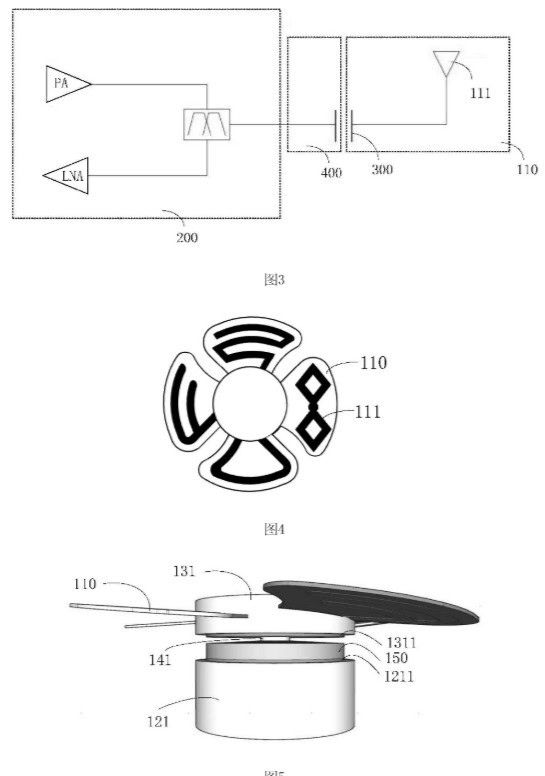
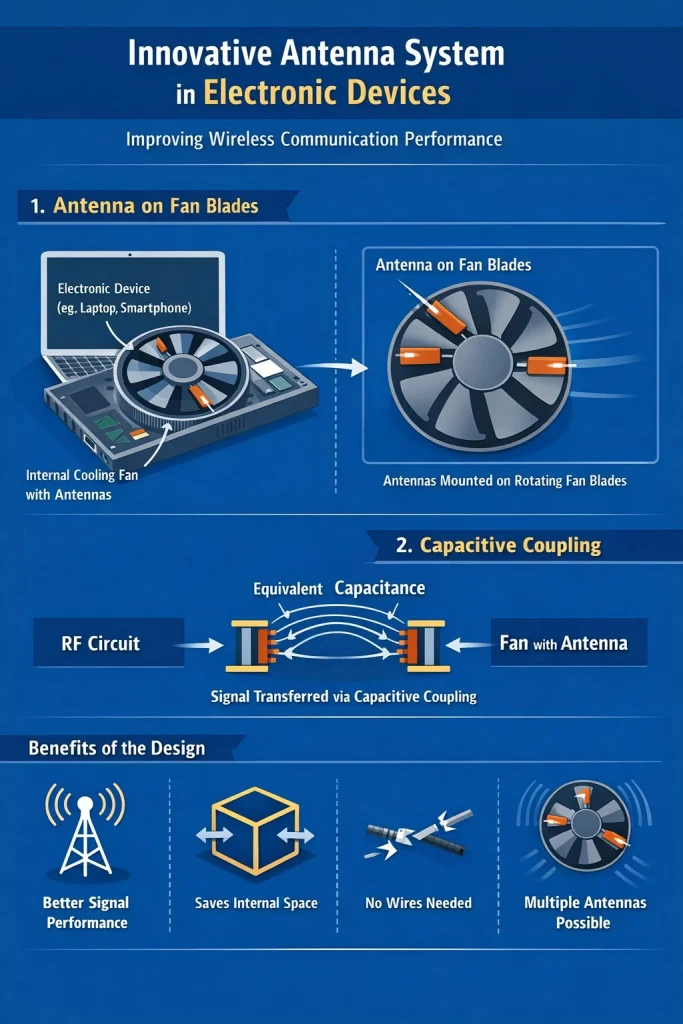
Vivo’s new patent describes antennas printed directly onto the blades of an internal cooling fan inside the phone. Unlike traditional frame-mounted strips that suffer from hand blockage, these fan-mounted antennas sit centrally in the chassis and are less affected by how the user holds the device.
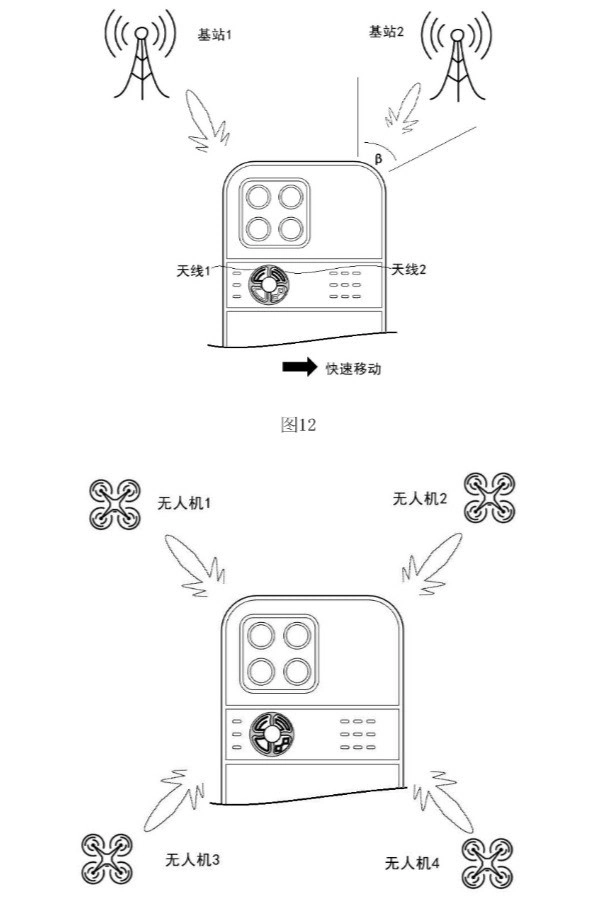
Because the fan can spin, the phone can change the orientation of its antennas mechanically, helping them line up better with nearby base stations or routers as the user moves. This could be especially useful in fast-changing environments such as commuting, travel, or dense city areas where signal handovers happen frequently.
Capacitive coupling “wireless” wiring
To avoid running cables to spinning blades, the system uses a capacitive coupling structure between the RF circuit and the rotating fan assembly. In practice, signals jump across a tiny air gap between facing metal surfaces, so the antennas stay connected without brushes or flex cables that would wear over time.
This approach simplifies the internal layout while enabling continuous data transmission even at high fan speeds, reducing mechanical failure points inside performance-focused phones. It also opens the door to more complex antenna arrangements that would be difficult to wire conventionally.
Multi-band, multi-role connectivity
Patent illustrations show that different fan blades can host different antenna types at once, including cellular, 5G, GPS, Wi-Fi, and potentially satellite links. In multi-device or drone scenarios, individual blades could even be aimed toward different hardware, creating a more flexible signal hub inside the phone.
By centralizing antennas on a rotating structure, the phone could more intelligently manage signal paths for on-device AI, location services, and low-latency gaming, even as the user moves around. This aligns with growing interest in phones as control centers for drones and connected devices.
Space and cooling advantages
Turning the cooling fan into an RF component saves internal volume that would otherwise be reserved for separate antenna modules. That freed-up space could be used for larger batteries, bigger camera sensors, or extra cooling components in high-end models.
At the same time, the active cooling system continues to pull heat away from the processor during heavy loads like gaming or AI tasks, improving sustained performance while the rotating antennas seek the best signal. It is a rare example of one part solving both thermal and radio challenges at once.
When this might reach phones
The patent, filed with China’s CNIPA under number CN121077517A, does not guarantee that a commercial Vivo device will launch with this exact design. However, with more gaming and “Pro” smartphones expected to adopt active cooling by 2026, a “smart fan” antenna system looks more plausible than in previous generations.
For now, the concept remains in the lab, but it shows how future phones might treat moving parts not just as cooling aids, but as key components in next‑gen connectivity systems. If realized, users may one day think of a spinning fan not just as airflow—but as the hidden engine behind stronger reception.