








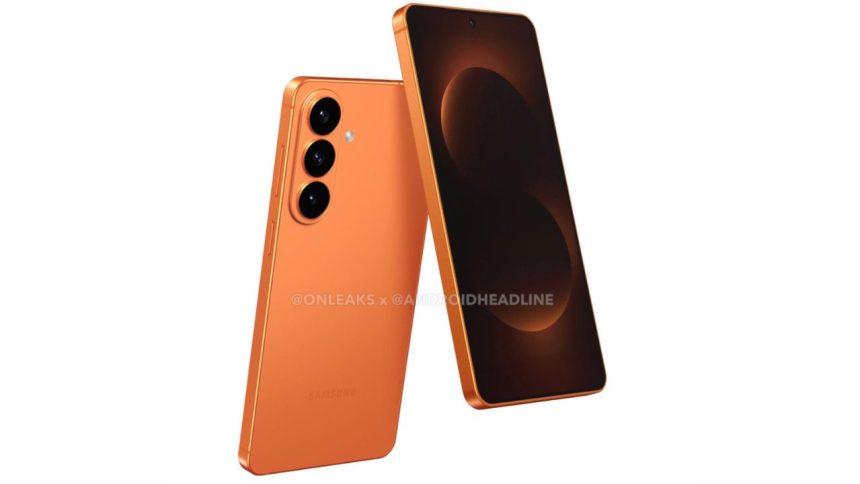
Samsung is planning to bring its in-house Exynos platform back into the spotlight with the Galaxy S26 lineup, and it could mean big savings for the company. According to industry reports, the Exynos 2600 chip will cost $20–$30 less per unit than Qualcomm’s high-end Snapdragon 8 Elite Gen 5, providing Samsung’s Mobile Experience (MX) division a significant financial cushion.
The company’s System LSI division will supply the new chip to the Galaxy S26 and S26+ models, marking a shift away from total dependence on Qualcomm’s silicon. With the soaring cost of cutting-edge mobile SoCs—Snapdragon 8 Elite Gen 5 chips are reportedly priced between $240 and $280 per unit—Samsung’s cost-saving move could translate into tens of millions of dollars saved across its global production run.
Financial Relief, Not Just Strategy
Samsung’s decision isn’t necessarily about outpacing Qualcomm in raw performance but about improving profit margins and reducing component costs. Last year, Samsung’s chipset procurement costs jumped more than 25%, largely due to using Qualcomm hardware exclusively for the Galaxy S25 series worldwide.
By bringing back the Exynos line in select markets, Samsung aims to find a more sustainable balance between cost, performance, and production scalability.
Performance Differentiation Returns
However, Samsung’s dual-chip approach also revives a familiar concern—performance inequality. Historically, Snapdragon models have outperformed their Exynos counterparts, delivering better thermal management and battery efficiency.
Reports suggest that the Exynos 2600 is showing promising benchmark results, though its real-world performance and efficiency will be the true test. This comes at an interesting time, as Qualcomm’s Snapdragon 8 Elite Gen 5 is reportedly running hotter than expected in some devices, such as the OnePlus 15.
A Potential Turning Point for Exynos
If the Exynos 2600 proves competitive, Samsung could continue expanding its use across premium phones beyond the Galaxy S26 series. Rumors indicate a 70-30 split between Snapdragon- and Exynos-powered S26 models, suggesting Samsung is testing the waters before going all-in.
In any case, the return of Exynos chips in flagship Galaxy phones signals a renewed confidence in Samsung’s internal silicon capabilities—and a smart financial play in a time of rising component costs.